
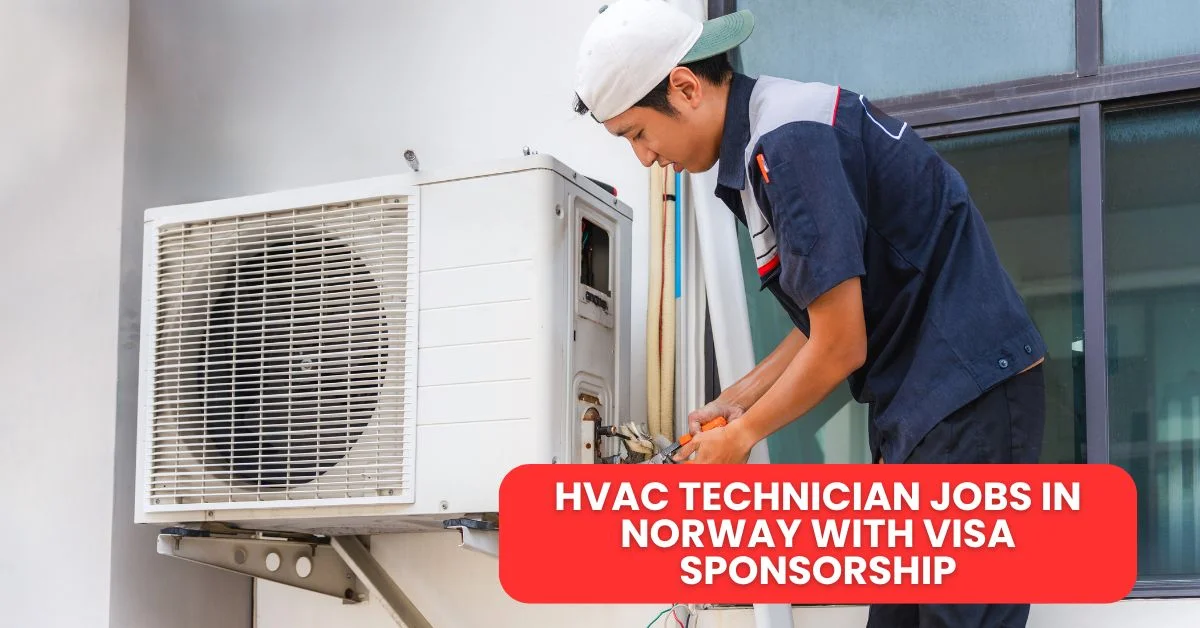
Norway’s job market in 2026 shows steady demand for skilled trades like heating, ventilation, and air conditioning (HVAC) work. With ongoing construction in energy-efficient buildings and green projects, companies seek qualified technicians from abroad.
If you have hands-on experience in installing, maintaining, or repairing HVAC systems, this could be your path to a stable role. Employers often sponsor visas for non-EU/EEA workers who meet the criteria, helping you settle in quickly.
Why Consider HVAC Roles in Norway with Sponsorship?
Norway stands out for its high living standards, fair wages, and focus on work-life balance. For HVAC technicians, the field ties into the country’s push for sustainable energy and modern infrastructure. Jobs involve working on systems that control indoor air quality, heating, and cooling in homes, offices, and industrial sites.
Demand comes from sectors like construction, manufacturing, and energy. In 2026, updates to immigration rules emphasize skilled roles, making it easier for qualified applicants.
Sponsorship means your employer handles much of the visa process, covering costs and proving the job fits local needs. This setup lets you focus on your craft while enjoying Norway’s clean air and outdoor access.
Key Requirements for Skilled HVAC Workers
To qualify for a residence permit as a skilled worker, you need to match Norway’s standards. The Norwegian Directorate of Immigration (UDI) oversees this. Here are the main points:
- Education or Training: Complete at least three years of vocational training in HVAC, plumbing, or a related field. This must align with a Norwegian program, like a craft certificate for refrigeration mechanics. University degrees in engineering work too.
- Job Offer: Secure a concrete offer from a Norwegian employer. The role must pay at least the industry standard—around NOK 450,000 annually for entry-level skilled work, rising with experience.
- Experience: Show relevant work history, such as troubleshooting electrical components in HVAC units or handling refrigerants like R-407C.
- Language Skills: Basic English suffices for many roles; Norwegian helps for client-facing work but isn’t always required.
- Age and Health: Be over 18 and provide health insurance coverage for your stay.
Non-EU/EEA applicants apply online via UDI. Processing takes about one month, with a fee of NOK 6,300 in 2026. If approved, you get a residence permit tied to the job, valid for up to three years initially.
| Requirement | Details | Why It Matters |
|---|---|---|
| Vocational Training | 3+ years in HVAC or equivalent | Ensures skills match Norwegian standards for safe, efficient work. |
| Salary Threshold | Minimum NOK 450,000/year | Protects against low-wage exploitation; higher for experienced techs. |
| Job Contract | Full-time, specific employer | Employer sponsors visa, proving local labor shortage. |
| Health Insurance | Full coverage for stay | Covers medical needs in Norway’s public system. |
| Application Fee | NOK 6,300 | Paid online; non-refundable if denied. |
Everyday Tasks of an HVAC Technician in Norway
In these roles, you handle practical tasks that keep buildings comfortable year-round. Norway’s cold winters and mild summers mean systems focus on efficient heating and ventilation.
Typical duties include:
- Installing new HVAC units in residential or commercial spaces, following safety codes.
- Diagnosing issues like refrigerant leaks or faulty thermostats using tools and software.
- Performing routine maintenance, such as cleaning filters or calibrating air flow.
- Repairing electrical and mechanical parts, including boilers or ductwork.
- Advising on energy-saving upgrades, like heat pumps for eco-friendly setups.
Most jobs are full-time, with shifts in daytime hours. Some involve travel between sites in cities like Oslo or Bergen. Safety training, like handling EPA-certified refrigerants, is standard.
Earning Potential and Benefits
HVAC technicians in Norway earn competitive pay, reflecting the skilled nature of the work. In 2026, averages hover around NOK 586,000 gross annually, or about NOK 282 per hour. In Oslo, this rises to NOK 620,000 due to higher living costs.
Factors like experience boost earnings:
- Entry-level (0-2 years): NOK 450,000–500,000.
- Mid-level (3-5 years): NOK 550,000–650,000.
- Senior (6+ years): NOK 700,000+.
Benefits often include:
- Paid vacation (25 days minimum).
- Overtime at 1.5x rate.
- Pension contributions from employers.
- Access to public healthcare once registered.
Taxes take about 25-35%, but the net pay supports a comfortable life. Many companies offer tools, vans, and training to help you grow.
Leading Employers Offering Sponsorship
Several Norwegian firms hire HVAC talent and support visas for qualified candidates. They operate in construction, energy, and services, often in high-demand areas.
- Caverion: A major player in building services. They recruit for installation and maintenance roles, sponsoring skilled workers in ventilation and cooling systems. Check their site for openings in Oslo.
- Uponor: Specializes in plumbing and HVAC solutions. They seek technicians for sustainable projects and handle sponsorship for experienced applicants.
- Føhn HVAC: Focuses on ventilation montors. Recent postings call for blikkenslagers (sheet metal workers) with HVAC backgrounds, open to international hires.
- Berge Energi Service: Hires for heat pump installation and service. They emphasize green energy and sponsor visas for techs with refrigeration skills.
- Schneider Electric: Offers roles in critical cooling systems. Their engineering teams support sponsorship for maintenance engineers.
Other names like Advansor and Novaform post HVAC-related jobs on platforms like Glassdoor. Tailor your CV to highlight certifications and past projects.
Steps to Land Your Sponsored Job
Start by building a strong profile. Update your resume with clear details on HVAC experience, tools used, and any certifications like EPA Section 608.
- Search Openings: Use sites like Finn.no, NAV.no, or LinkedIn. Filter for “HVAC tekniker” or “ventilation montør” with “visa sponsorship.”
- Network: Join expat groups on Reddit (r/Norway) or Facebook for tips from current workers.
- Apply: Send applications directly to companies. Include a cover letter noting your willingness to relocate.
- Interview: Expect questions on troubleshooting scenarios or safety protocols. Virtual calls are common.
- Secure Offer: Once offered, the employer files sponsorship docs with UDI.
- Apply for Permit: Submit your part online, including passport and quals. Track status via UDI portal.
Aim to apply early—processing aligns with job starts in spring or fall.
Navigating the Visa Application Process
After the job offer, sponsorship kicks in. Your employer verifies the role fills a skills gap and meets pay rules. You then apply for the residence permit.
Gather these docs:
- Valid passport.
- Job contract.
- Proof of training (diplomas, certificates).
- Police clearance.
- Proof of funds for initial stay.
Submit from your home country or, if visa-free, enter Norway first. Approval leads to a permit card picked up at the airport or police station. Register for a D-number (temp ID) right away for banking and housing.
Common pitfalls? Incomplete docs or mismatched skills—double-check against UDI guidelines. If denied, appeal within three weeks.
Life as an HVAC Tech in Norway
Beyond work, Norway offers a balanced lifestyle. Expect 37.5-hour weeks with generous breaks. Cities like Oslo buzz with culture, while fjords provide weekend escapes.
Challenges include high costs (rent NOK 10,000–15,000/month in capitals) and learning Norwegian for daily life. But communities for internationals ease the transition. After three years, you can apply for permanent residency.
In short, HVAC jobs with sponsorship open doors to rewarding careers. With the right prep, you could thrive in Norway’s innovative scene. Start browsing listings today—opportunities wait for skilled hands.
